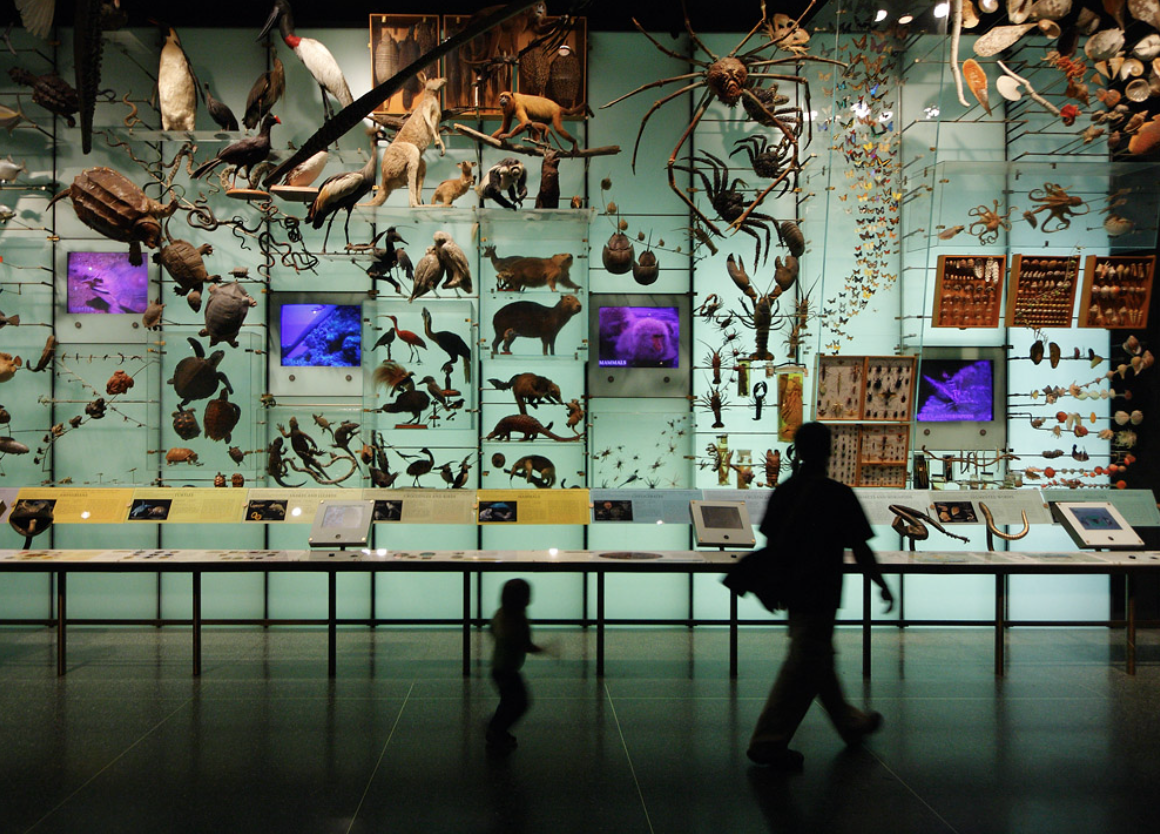
Welcome to your exploration of biodiversity, the incredible variety of life on Earth. In this article, we will provide you with the tools to understand how life is organized, classified, and interconnected. From the smallest virus to the largest mammal, we will discover the principles that biologists use to make sense of the natural world.
The Foundation: How We Organize and Classify Life
Our journey begins with a fundamental question: what defines life? All living things share key characteristics of living things, including organization, metabolism, growth, response to stimuli, reproduction, and evolution. To bring order to life’s diversity, scientists use a universal system. Binomial nomenclature, developed by Carl Linnaeus, gives each species a two-part Latin name (e.g., Homo sapiens). Species are grouped into a hierarchy of taxonomic ranks (Domain, Kingdom, Phylum, Class, Order, Family, Genus, Species). The more taxonomic ranks two organisms share, the more closely related they are.
To identify an unknown organism, biologists use dichotomous keys. A ‘good’ key provides clear, binary choices based on observable traits, leading the user to a single species. A ‘bad’ key is ambiguous or uses subjective or non-universal characteristics. We can visualize evolutionary relationships using phylogenetic trees. These diagrams, built using evidence from anatomy, physiology, and DNA, show common ancestry. Points where lines branch (nodes) represent a common ancestor. The length of branches can represent the amount of evolutionary change or time.
The Major Branches of Life: From Domains to Kingdoms
Life is divided into three overarching Domains:
- Bacteria: Prokaryotic cells (no nucleus), ubiquitous.
- Archaea: Prokaryotic cells, often extremophiles.
- Eukarya: Eukaryotic cells (with a nucleus), encompassing four of the six kingdoms.
The theory of endosymbiosis explains how eukaryotic cells evolved from prokaryotes, with mitochondria and chloroplasts originating from engulfed bacteria.
The six kingdoms and their key characteristics are:
- Archaebacteria: Prokaryotes in extreme environments (e.g., methanogens).
- Eubacteria: “True” bacteria, some pathogenic, many beneficial.
- Protista: A diverse “catch-all” kingdom of eukaryotes, mostly unicellular. They are categorized by nutrition methods: plant-like algae (autotrophs), animal-like protozoans (heterotrophs), and fungus-like slime molds (decomposers). They have key applications in research and industry.
- Fungi: Eukaryotic heterotrophs that absorb nutrients. Their cell walls are made of chitin, unlike plants (cellulose). They are vital decomposers.
- Plantae: Eukaryotic, multicellular autotrophs. Key adaptations like a waxy cuticle and vascular tissue allowed plants to move to land. The four main categories are bryophytes, pteridophytes, gymnosperms, and angiosperms.
- Animalia: Eukaryotic, multicellular heterotrophs that ingest food. They are classified based on characteristics like body symmetry, tissue layers, and the presence of a backbone.
The Edge of Life: Viruses and Prokaryotes
Viruses straddle the line between living and non-living. They have genetic material but cannot reproduce independently. They infect a host cell, hijacking its machinery to replicate via the lytic (active replication, cell bursts) or lysogenic (dormant, DNA incorporated) cycle. A successful host jump (e.g., COVID-19) requires mutations that allow the virus to bind to and infect a new species. Vaccines work by priming the immune system with a harmless version of the pathogen, allowing for a rapid and effective response upon future exposure. While similar in nutrition, reproduction (binary fission), and habitat, Bacteria and Archaea are in different domains due to fundamental genetic and biochemical differences (e.g., cell wall composition).
Why It All Matters: Biodiversity and Resilience
Biodiversity is not just a list of species; it is the health of our planet’s ecosystems. It provides resilience—the ability to withstand environmental changes and disturbances. We can measure biodiversity quantitatively using indices like the Shannon-Wiener Index, which considers both species richness and evenness. However, biodiversity is under threat. To protect it, we can support conservation efforts, reduce our ecological footprint, combat climate change, and make sustainable choices. Understanding the concepts in this unit is the first step toward becoming a steward of our planet’s magnificent, and irreplaceable, tapestry of life.