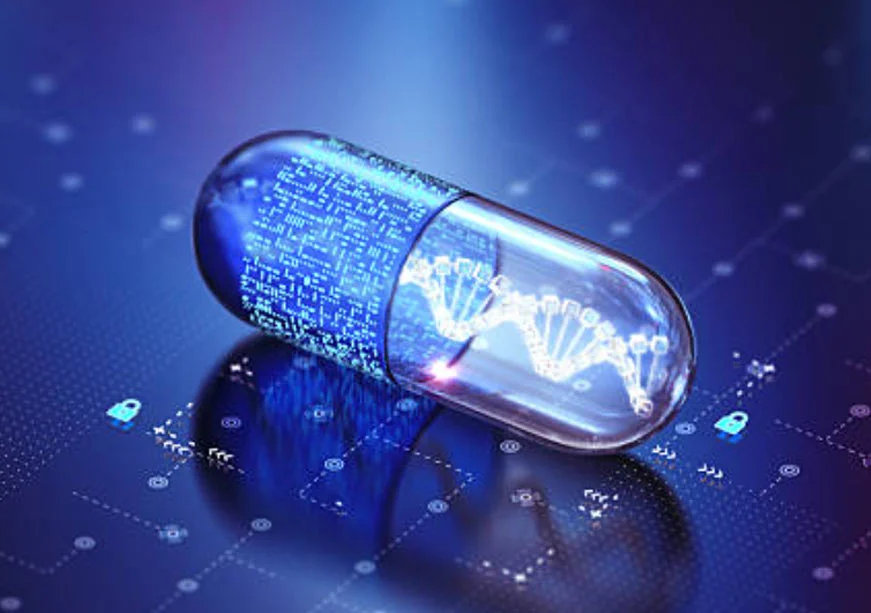
In the past, drug discovery was often celebrated as a triumph of persistence and serendipity, relying on the labor-intensive screening of thousands of natural compounds to find a single “magic bullet.” However, the rapid integration of Artificial Intelligence (AI) and Machine Learning (ML) has sparked questions about how these digital interventions differ from traditional laboratory methods. Have these advancements prioritized computational speed at the expense of biological accuracy or experimental rigor? Let’s delve into the truth about neural networks, molecular modeling, and the technology behind AI to determine how these tools are reshaping our approach to modern medicine.
1. The Shift to Predictive Modeling in Drug Discovery
Over recent years, researchers have transitioned from physical trial-and-error to using predictive algorithms. A landmark breakthrough occurred with the release of AlphaFold, a system developed by Google DeepMind that demonstrated how AI could predict a protein’s 3D shape from its amino acid sequence with incredible accuracy (Jumper et al., 2021).
How Does AI Discover Drugs? Is it Replacing Scientists?
Several factors define the mechanism of AI-driven discovery:
- Virtual Screening: Instead of physically mixing chemicals in a petri dish, AI performs “in silico” screening. It simulates how billions of potential molecules might bind to a target protein.
- Generative Chemistry: Much like AI can write a poem, it can “write” new molecular structures. It designs entirely new compounds that have never existed in nature, optimized to fit specific biological “locks.”
- Protein Folding: AI solves the “folding problem,” identifying the complex shapes of proteins that cause diseases, which allows for more precise drug targeting.
The Result: A Targeted Molecular Design
This practice makes drug design highly efficient. Unlike traditional methods that require years of “wet lab” testing to identify a lead compound, AI can narrow down millions of candidates to the most promising few in weeks. This allows for a precise chemical response focused on specific disease markers, though it still requires rigorous physical validation to ensure the digital prediction holds true in a living organism.
2. Speed of Development and Lead Optimization
One notable change in pharmacology is the speed at which drug candidates can reach clinical trials, resulting from the ability to process “Big Data” at scale.
Why Is AI Development So Fast?
- Parallel Processing: While a human team can test a handful of compounds at a time, AI models can analyze the properties of millions of molecules simultaneously.
- Failure Prediction: AI can predict the toxicity or solubility of a drug early in the process. By “failing fast” in a digital environment, researchers avoid spending years on compounds that would ultimately fail in human trials.
Is the Speed a Safety Concern?
While the timeline for finding a “hit” is compressed, the fundamental requirements for safety remain unchanged. AI-designed drugs must still undergo the same rigorous Phase I, II, and III clinical trials as any other medication. The technology is an accelerator for the discovery phase, not a shortcut through the safety phase. Long-term monitoring and human oversight remain the gold standard (Stokes et al., 2020).
3. The “Black Box” Concern: Transparency and Data Bias
A common concern regarding AI in medicine is whether the “decisions” made by a computer can be fully understood or trusted by human doctors.
Does AI Make Mistakes?
- Data Quality: AI is only as good as the data it is trained on. If the historical data is biased or incomplete, the AI may suggest “hallucinated” molecules that are impossible to synthesize or ineffective in diverse populations.
- Interpretability: Some deep learning models are “black boxes,” meaning it’s difficult for scientists to see exactly why the AI chose one molecule over another.
- Repurposing Existing Drugs: Interestingly, the same technology is being used to find new uses for old drugs—identifying how a known blood pressure medication might be used to treat a specific type of rare cancer.
Is AI “Better” Than Traditional Chemistry?
AI is not necessarily “better,” but it is exponentially faster at navigating the “chemical space.” While traditional chemists rely on intuition and known chemical families, AI can explore unconventional structures. Most experts view AI as a co-pilot rather than a replacement, combining human creativity with machine processing power.
4. Is AI-Driven Medicine a Healthy Choice for the Future?
Despite the shift in methodology, AI-enhanced drug discovery remains a vital tool for the future of global health:
- Rare Disease Solutions: AI makes it economically viable to search for treatments for rare diseases that were previously ignored due to the high cost of traditional research.
- Antibiotic Resistance: Researchers are using AI to discover new classes of antibiotics to fight “superbugs” that have become resistant to traditional medicine.
- Personalized Medicine: AI can help design drugs tailored to an individual’s genetic makeup, minimizing side effects.
The Takeaway: Innovation and Informed Progress
While AI technology represents a significant change, it offers unique advantages in a world facing evolving health threats. To maximize the benefits of this innovation:
- Support Open Data: The more high-quality, peer-reviewed data available to AI, the more accurate and safe its predictions becomes.
- Human-in-the-loop: Ensure that every AI-generated lead is vetted by experienced medicinal chemists and biologists.
- Look at the Clinical Results: Focus on the success rates of these drugs in human trials rather than the hype surrounding the algorithms.
Conclusion: Embracing Innovation for Global Health
Scientific advancements have influenced how we fight disease, but the goal remains the same: finding safe, effective ways to heal the human body. AI in drug discovery provide a precise, efficient way to navigate the vast complexity of biology without the slow, traditional “search for a needle in a haystack.” By understanding the science and staying informed, you can appreciate the role of this modern technology in navigating the future of medicine.