
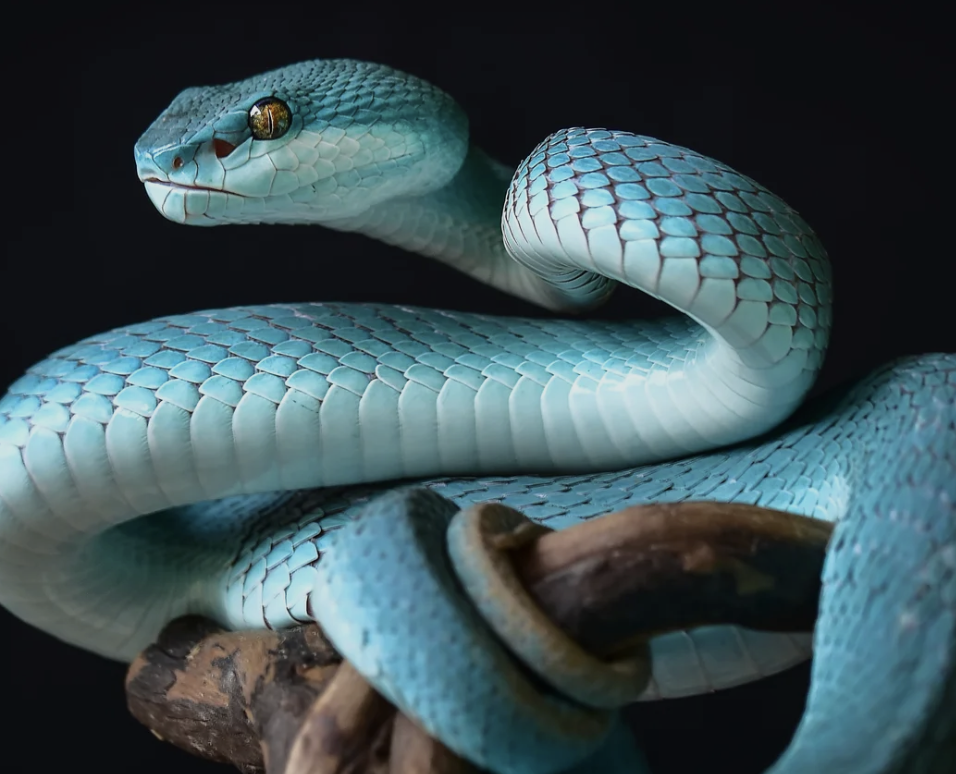
What do you think of when you think of snakes? For most people, we envision a large scaly snake with huge venomous fangs and a murderous intent. But that isn’t how most serpents are. Most serpents are instead harmless and are actually much more diverse than the stereotype. Some do not even have venom and others actually give live birth rather than laying eggs. If you take a closer look, you can see behind the scary mask and reveal the true fascinating world of these serpents.
Table of Contents:
- Order of Serpents
- Blindsnakes
- Boas and Pythons
- Colubrids
- Elapids
- Vipers
- Conclusion
Order of Serpents
Serpents are vertebrates in the class Reptilia. Technically, snakes are part of the order Squamata, which includes all scaly reptiles, from tiny geckos to Komodo dragons. This order contains over 10,000 different species making it the second largest order of vertebrates after Perciformes (perch-like fish). To make classification easier, snakes have their own suborder within Squamata: Serpentes. There are many differences between snakes and the rest of Squamata and other reptiles.
First, the most obvious is that snakes are limbless. Therefore, they cannot move around like legged reptiles; instead, they have four different methods of movement: slithering, accordion locomotion, sidewinding, and rectilinear motion. Slithering is the most common and famous method where they position themselves in curves and shift their weight back and forth in an S- shape. Accordion motion relies on the snake bunching themselves up and then stretching forward, repeating this “accordion style” contractions to move. This method is extremely helpful for vertical movements up trees where snakes would hunt birds and eggs. Sidewinding is similar to slithering, but when in the S position, the snakes thrust themselves upward in order to fling themselves sideways. Lastly, is rectilinear motion, a fancy way of saying going in a straight line. This is the least used and it is similar to a caterpillar motion where they pull themselves forward inch by inch, helpful for navigating tight corridors. These different movement techniques allow them to navigate a myriad of environments efficiently, despite the lack of limbs.
Major Differences
Other differences include the fact that snakes of not have moveable eyelids or ear holes. As a result, snakes primarily rely on smell and touch. Their forked tongue brings air particles into their mouth where an organ at the top of the mouth called the Jacobson’s organ where the odor in the air is identified. Lastly, snakes usually have curved teeth, though the exact number of teeth and fangs depends on whether they are venomous or not, and also have joints in their skulls that allow them to swallow down large prey and open their mouth much larger. While there are many differences between snakes and other reptiles, there are also deviations inside the suborder Serpentes, which can be classified into 5 main groups of snakes.
Blindsnakes
The suborder Serpentes first splits into two groups, the higher evolved serpents that we usually associate with snakes and the simpler blindsnakes (Typhlopidae). Blindsnakes are nonvenomous, worm-like snakes that burrow into the ground and are a pinkish brown color. Unlike other snakes, these snakes do not have broad belly scales and rather have smooth scales as they do not need the belly scales for the friction needed to generate movement. The most peculiar part about these snakes is their sight, or lack thereof. Their eyes are small dots and their mouth is also well hidden behind their snout. All of these features make it so that these snakes are often confused with earthworms, but their diet consists of tiny ants and other insects rather than detritus like earthworms. While they don’t fit your classic, large eyes, scaly snake image, they are still a part of the Serpentes family.
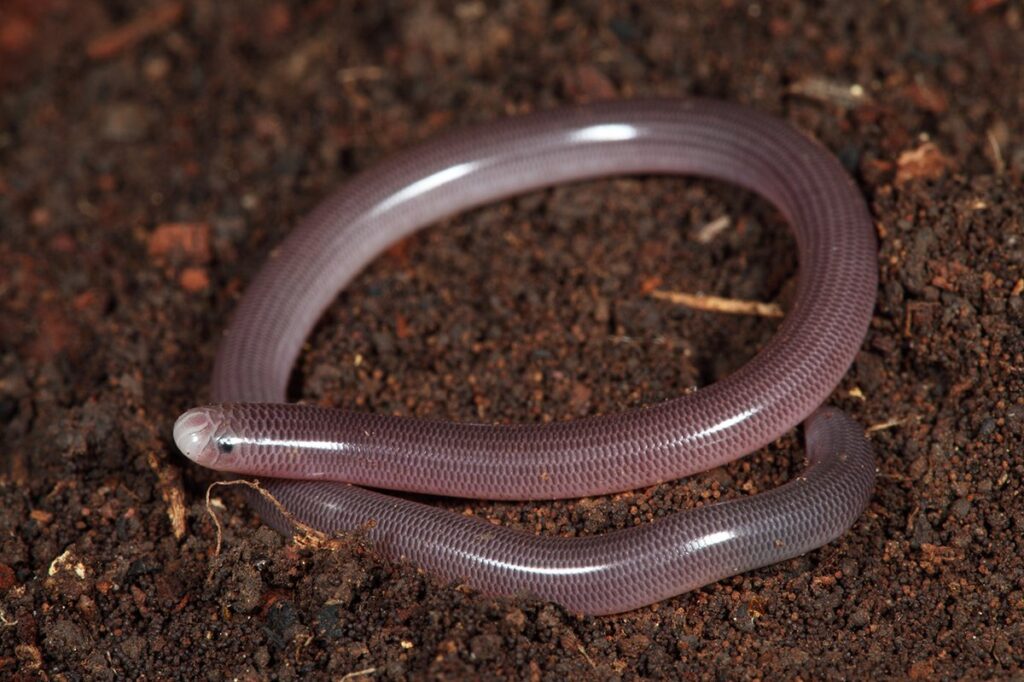
A Brahminy Blind Snake (not an earthworm)
Boas and Pythons
These nonvenomous snakes are the oldest and largest of the higher evolved snakes. Their features include a rigid jaw, a heavy skull, and vestigial limbs and remains which do not have a function anymore that were passed down from lizard ancestors. The main adaptation of this family is that they are constrictors. They lie in hiding, waiting to ambush their prey and when the prey gets too close, they lunge and wrap around the victim. Contrary to popular belief, the pythons and boas do not crush the bones of their victim as they squeeze; rather, they gradually tighten their grip as the prey takes breaths, eventually suffocating the animal or keeping the animal’s heart from pumping blood across its body. Then, the constrictor consumes the dead prey head-first.
While boas and pythons are both constrictors, they are technically parts of separate families. This is because boas are viviparous meaning they give live-birth while pythons are oviparous and lay large numbers of eggs and then protect the eggs. This distinction leads to the two being classified in two separate groups.
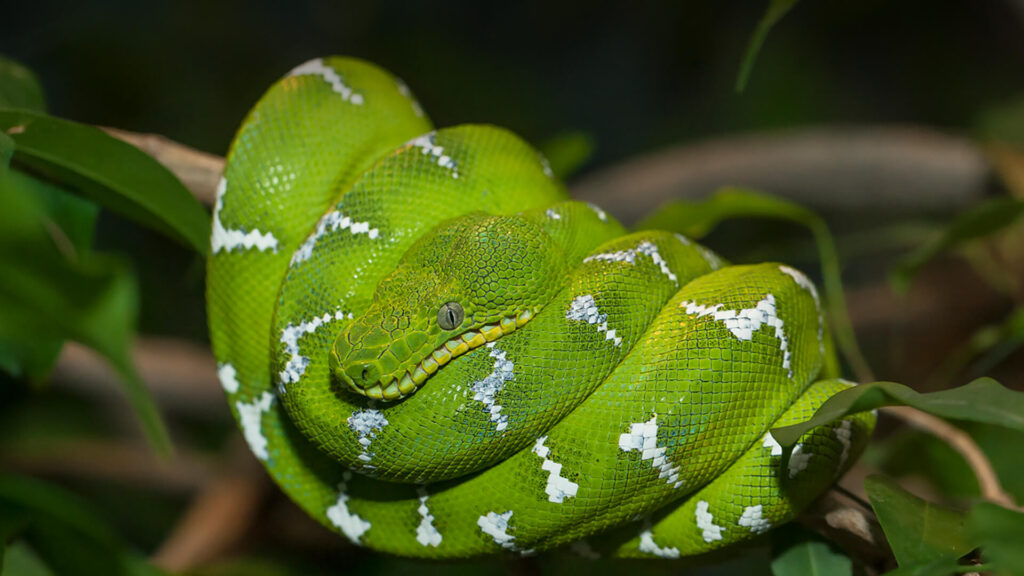
A boa curled up on a branch
Colubrids
This vast group makes up the majority of the species of snakes. Roughly, 2/3 of all known snakes are part of the Coulibridae family which contains roughly 1760 species. These include many common snakes such as garter, rat and grass snakes. Most colubrids are nonvenomous, but of the ones that are venomous, most are harmless to humans as the venom is in such small amounts that it does no damage. An interesting difference between them and the previous boas is that their left lung is almost entirely nonexistent and their respiration happens almost entirely through their right lung. This anatomical difference exists in the more complex elapids and vipers as well. As they are a wide group, colubrids exist in almost every single habitat.
Elapids and Vipers
These snakes are the two more dangerous and venomous snakes. However, there are many stark differences between these pernicious snakes. Elapids have shorter fangs that are always erected compared to vipers who have long foldable fangs. The other major contrast is in the composition of their venom. Elapid venoms primarily consist of neurotoxins, which target the nervous system and can induce paralysis if not promptly treated with antivenom. They use this to paralyze their prey in place and destroy its’ motor neurons. Vipers’ venoms on the other hand are predominantly cytotoxic (damaging cells), exerting localized effects that cause tissue damage and necrosis at the site of the bite.
The elapids and vipers contain some of the most famous and deadly snakes. Some well-known elapids are the king cobra, black mamba, coral snakes, and all the sea snakes. Some vipers include the rattlesnakes of the desert and the pit vipers. While these are what most people think of when thinking of snakes, they actually make up only a small portion of the entire Serpentes family.
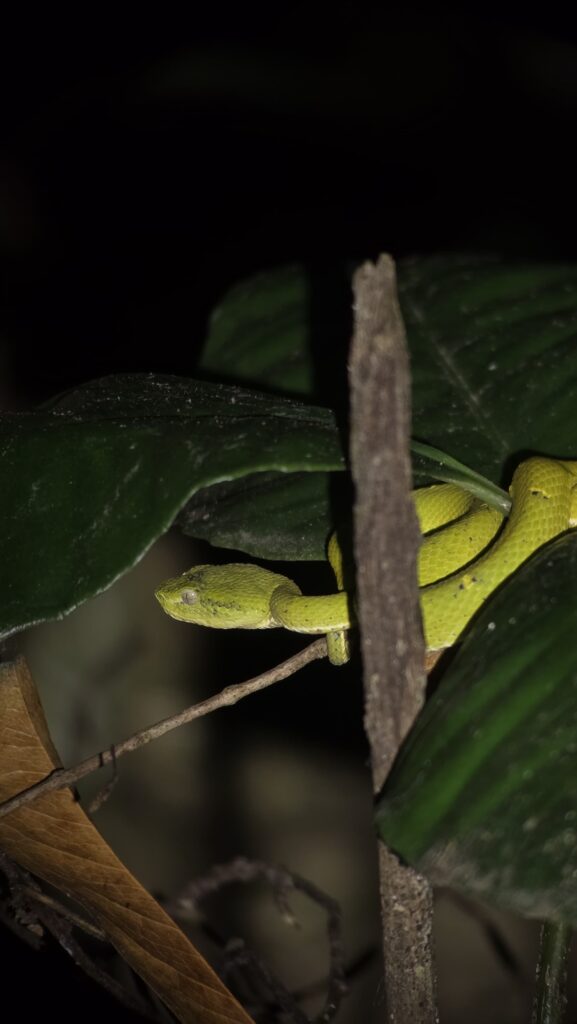
A pit viper that I saw on a tour in Costa Rica
Conclusion
Snakes are a diverse family. From the tiny, earthworm-like blindsnakes to the venomous vipers, each snake has its own unique traits that help it survive in its own way. Furthermore, these fascinating creatures are not as scary and horrifying as many believe. After all, the colubrids, boas and blindsnakes, which make up over 75% of snake species, are completely harmless while the venomous elapids and vipers are rare to even attack humans. Now that you understand the complexity and distinctions in these serpents, next time you are at a zoo or park, don’t shy away from the snake section. Next time, take a close look at our limbless relatives in the glass and observe their natural beauty and prowess.

Pingback: hello world