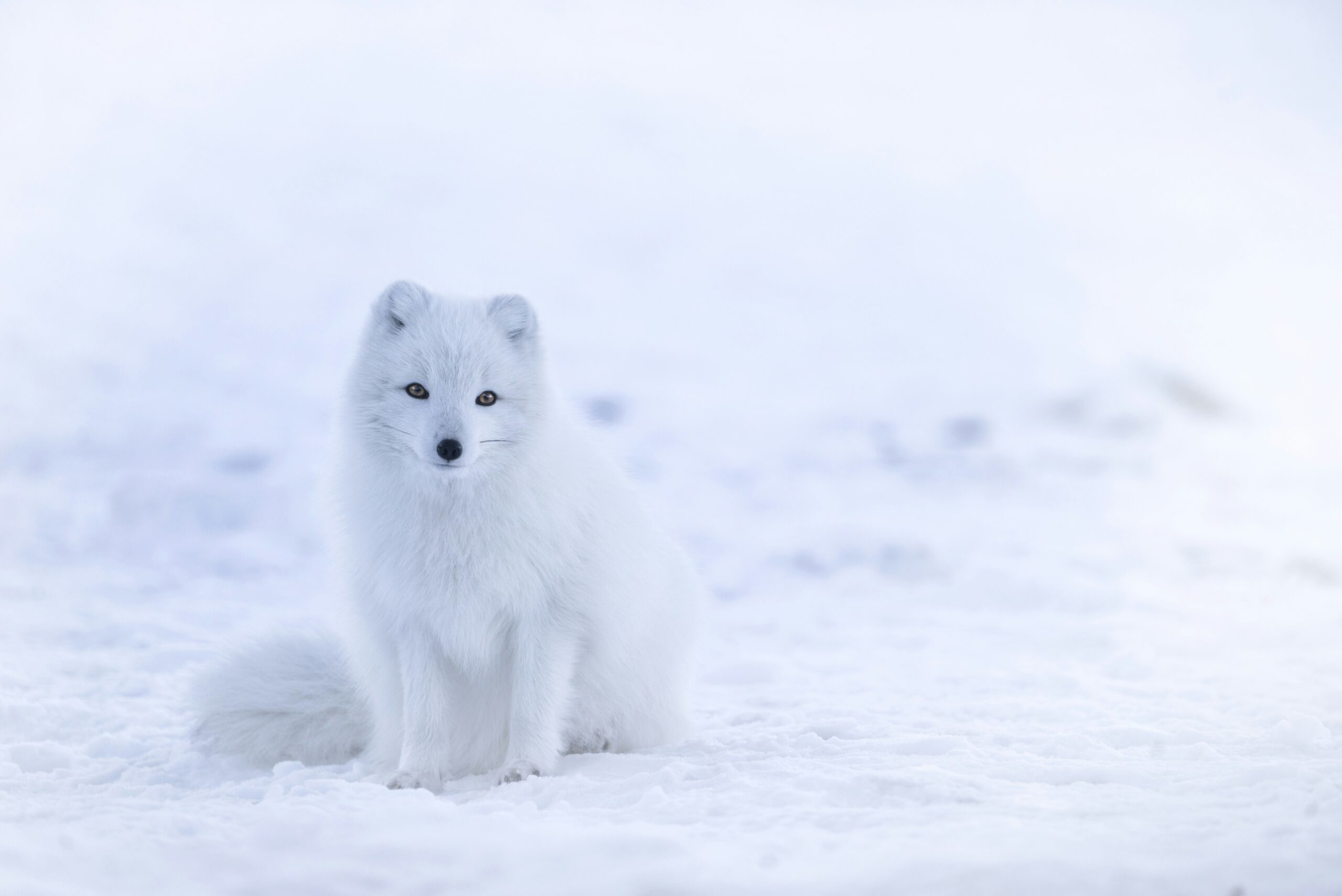
The long necks of giraffes allow them to reach the high leaves on a tree. The thin beak of a humming bird allows it to reach deep into long, tubular flowers to access nectar. Arctic foxes have white fur so they can blend into their snowy environment. It seems like each organism’s physical features correlate with their needs. Is this just a coincidence? Are there larger forces at play? Were these organisms just born this way? Or did they evolve over time?
These were some of the questions leading biological research in the early 1800’s.
Table of contents
Through basic observation scientists have known for centuries that organisms appear to be adapted to their environments and needs, but for decades no one gave a scientific explanation as to how and why this occurs.
- Evolution and Adaptations
- Lamarck’s theory of Evolution
- Disproving Lamark’s theory of Evolution
- Darwin’s theory of evolution
- Conclusion
Evolution and Adaptations
Evolution is the long term net change of an organism’s characteristics over time.
The concept of evolution is highly consequential to adaptation. Near the late 1700’s scientists began to realize that organisms actually evolved over time, but they didn’t know that this evolution actually led to these adaptations.
Adaptations are characteristics that are favorable to an organism and allows it to survive or reproduce.
Lamarck’s theory of evolution
Jean Baptiste Lamarck, a French naturalist and biologist, published the first and most influential theory on evolution. He was the first to establish the link between evolution and this adaptability of species. However, his line of reasoning was proven to be false. Lamarck’s theory on evolution was based on the concept of inheritance of acquired traits. This means that organisms can pass down the traits they acquire to their offspring
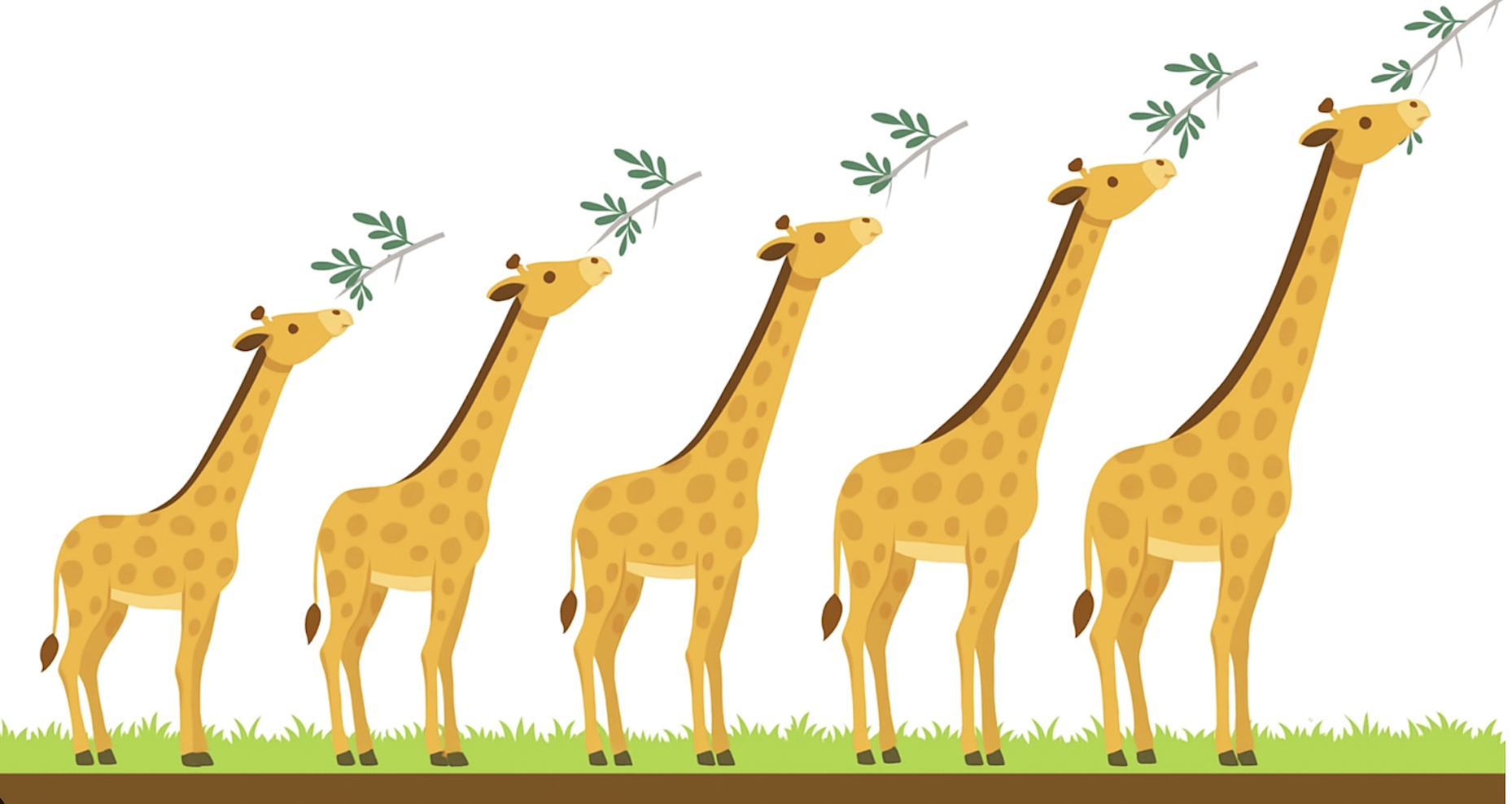
Take the example of the giraffe. Lamarck proposed that a giraffe could acquire the trait of having a long neck and this acquired trait could be passed down to its offspring. Lamarck claimed that the traits an organism acquired tend to be favorable to the organism due to a concept called use and disuse. Essentially, He suggested that since the giraffe was in need of a long neck to be able to reach trees, a giraffe over its lifetime would use its neck more often, and as a result of this, its neck would begin to stretch, which is how it would acquire the trait. And over time, more and more giraffes would acquire this trait by stretching their necks and they would pass this acquired trait down to their offspring causing the population to evolve over time.
The principle of use and disuse
Disproving Lamarck’s theory of evolution
We now know that it is impossible for an organism to pass down acquired traits. This would be like claiming that the son of an expert bodybuilder would turn out inherently stronger than other children without any training. Because of further studies and advancements in the field of genetics, we now know that the only thing we inherit from our parents is their DNA. Acquiring traits doesn’t change out DNA. In Lamarck’s example, if the giraffe stretched its neck this wouldn’t cause a change in its DNA.
Darwin’s theory of evolution
In 1809, the same year Lamarck published his book Philosophie Zoologique, which contained his take on evolution, Charles Darwin, soon to be one of the most important figures in Biology, was born in Shrewsbury, England. When he was 22 in 1831, Darwin went on a global voyage on his ship the HMS Beagle with the goal of making observations on plants, animals, and geological formations. While on this voyage, Darwin developed what is believed today as the true theory of evolution.
Nowadays we call Darwin’s theory of evolution “Natural selection”. Darwin argued that when short giraffes reproduced, sometimes their offspring wouldn’t reflect their parent’s genes and turn out taller than usual. We now know these random changes in DNA to be called mutations, but Darwin didn’t know this and he referred to these changes as “sports” or variations. But Darwin took this a step further and said that the giraffes with the “tall mutation” was more likely to survive and reproduce, increasing their likelihood of creating offspring. These offspring then would inherit the “tall mutation” from their parents. Note that the “tall mutation” is not an acquired characteristic and is present in an organisms genetic code, meaning giraffes can pass it down to their offspring As a result, the offspring now carry the tall mutation and therefore have a higher likelihood of surviving. Over time, this descent with modification continues until most giraffes have a version of the tall mutation, causing most of the population to be tall. And this doesn’t just apply to giraffes. The general principle of natural selection applies to all life and explains why each organism’s physical features correlate with their needs.
Conclusion
Darwin’s theory of natural selection is one of the most pivotal theories of Biology. It changed how we study Biology to this day. Although Biologists consider Lamarck’s hypothesis to be incorrect, it is still essential to understand. Learning about Lamarck’s hypothesis teaches us the importance of falsifiable hypotheses
If you want to learn about Dinosaurs evolution feel free to check this blog post