
The recent launching of the Artemis 2 mission caused a global sensation in space and the engineering miracles that have gone into this mission. As humanity prepares to once again send astronauts to the Moon, many people are starting to not only wonder about the mission itself, but also about the fundamental physics that make these journeys possible. One of the most common questions being how the 35,000kg capsule is propelled through the vacuum of space, where there is no air to push against. This question reveals a widespread misconception about how motion works beyond Earth’s atmosphere.
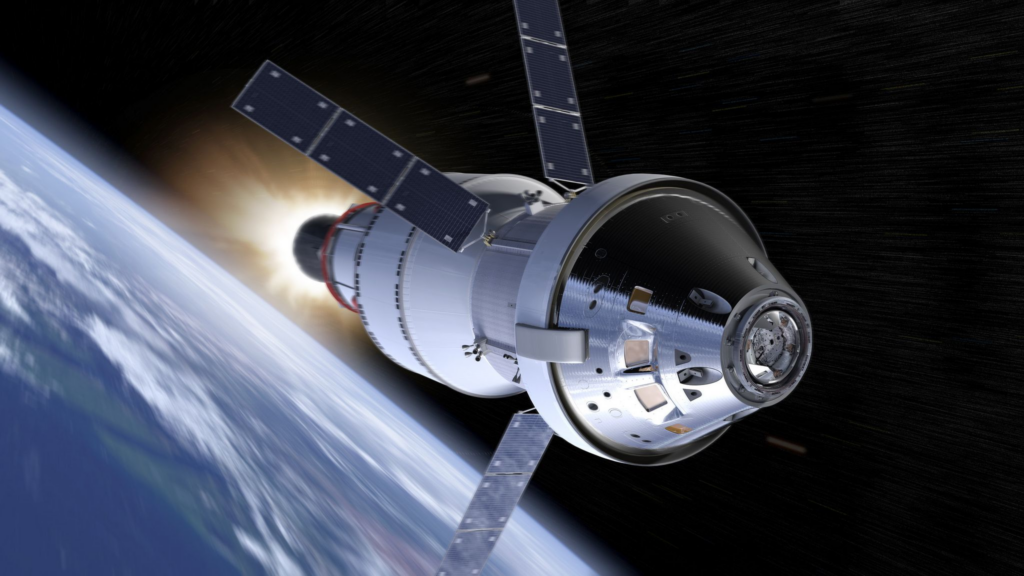
In everyday life, we are used to objects that move by pushing against something—cars rely on friction between the tires and the asphalt, and airplanes depend on the propelled air being pushed behind the turbine engines. It seems logical, then, to assume that rockets must also need air to function. However, assumptions are made, and most assumptions are wrong. Rockets operate on a completely different principle, one that does not depend on the surrounding environment.
To understand why, we must first look at how rockets function. Unlike airplanes, rockets do not rely on the oxygen and matter from the surrounding air to push against. Instead, rockets carry fuel and oxidizer, usually in liquid form. Inside the combustion chamber, the fuel and oxygen are mixed and ignited, producing an extremely high temperature, thus high pressure gas. This rapid combustion causes the gases to violently expand and be forced out of the rocket’s nozzle, transforming the high-temperature, high-pressure gas produced by combustion into a high-velocity, supersonic exhaust stream to generate thrust. Because this process does not rely on the outer surroundings, and the propulsion is generated directly inside the combustion chamber, it allows rockets to propel in vacuum where there is nothing to push against.
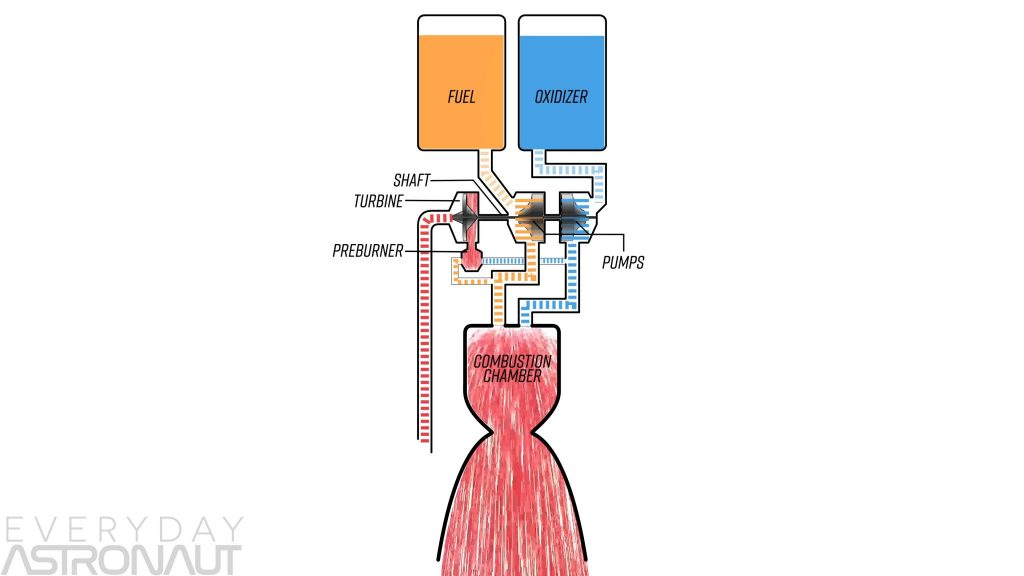
This internal process connects directly to the fundamental physics behind rocket motion. Rockets operate according to Newton’s Third Law, which states that for every action, there is an equal opposite reaction. As exhaust gases are expelled downward at high speed, the rocket experiences an equal and opposite force upward, generating thrust. In fact, rockets are more efficient in outer space, not only because there is no air resistance, the vacuum makes the gas being extruded through the nozzle significantly more effective because it allows the gas to expand more freely and also requires much less fuel to accelerate.
In conclusion, rockets are able to move in outer space because they do not rely on the surrounding atmosphere, instead generating thrust from pre-loaded liquid oxygen and fuel. This process, governed by Newton’s Third Law, allows rockets to function perfectly well in vacuum. In fact, being more efficient.As missions like Artemis II push the boundaries of human exploration, understanding the physics behind rocket propulsion not only corrects common misconceptions but also highlights the elegance and power of the fundamental laws that make space travel possible.
https://shorturl.fm/Yo51u