
The Arctic is melting faster than any other region on Earth, warming at nearly four times the global average. This rapid change raises an important question: why is the Arctic melting faster than Antarctica, even though both are covered in ice?
Understanding the Antarctica vs Arctic contrast reveals key scientific differences in geography and climate systems. In this article, we will explain the main causes behind the polar ice difference and why it matters on a global scale.
Table of Contents
- What’s the difference between the Arctic and Antarctica?
- Why is the Arctic melting faster?
- What is the albedo effect?
- Why Antarctica is more stable
- Why this matters for us
What’s the Difference Between the Arctic and Antarctica?
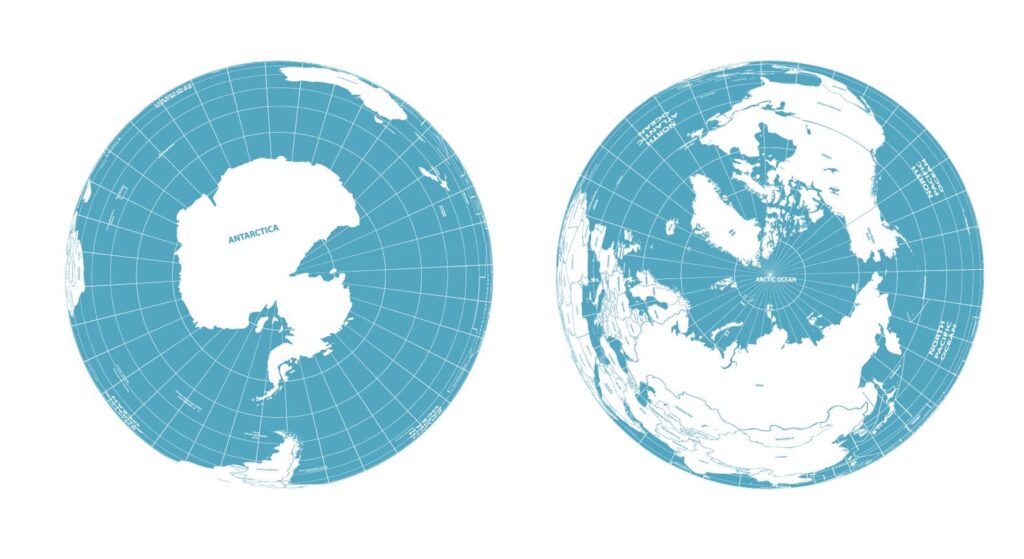
The Arctic is an ocean covered by sea ice, while Antarctica is a land continent covered by ice sheets. This fundamental difference explains much of the polar ice difference.
Because water heats and cools faster than land, the Arctic responds more quickly to temperature changes, making it more vulnerable to rapid melting.
Why Is the Arctic Melting Faster?
1. Sea Ice vs Land Ice
Arctic ice floats directly on ocean water, so it is exposed to warmer temperatures from both the air and the sea. This makes it easier for the ice to melt quickly.
In contrast, Antarctic ice sits on land, which provides more stability and slows down the melting process.
2. The Albedo Effect
Ice reflects most sunlight, while dark ocean water absorbs heat. When Arctic ice melts, it exposes water that absorbs more energy.
This creates a positive feedback loop, known as the albedo effect, which accelerates warming and causes even more ice to melt.
3. Arctic Amplification
The Arctic experiences Arctic amplification, meaning it warms significantly faster than the global average.
This happens because multiple feedback processes, including the albedo effect, combine to intensify and accelerate warming in the region.
Why Is Antarctica More Stable?
Antarctica is surrounded by the Antarctic Circumpolar Current, a powerful ocean current that isolates the continent.
This current blocks warmer water from reaching Antarctica, helping maintain colder temperatures and slowing large-scale melting.
Why Does This Matter?
The rapid loss of Arctic ice contributes to rising sea levels and increases the risk of coastal flooding. It also affects global climate patterns.
Additionally, melting permafrost can release methane, a powerful greenhouse gas, which further accelerates climate change.
In conclusion, the fact that the Arctic is melting faster than Antarctica is the result of differences in geography, climate systems, and feedback mechanisms.
Understanding the polar ice difference helps explain how interconnected Earth’s systems are and why changes in one region can have global consequences.
https://shorturl.fm/IXYgT