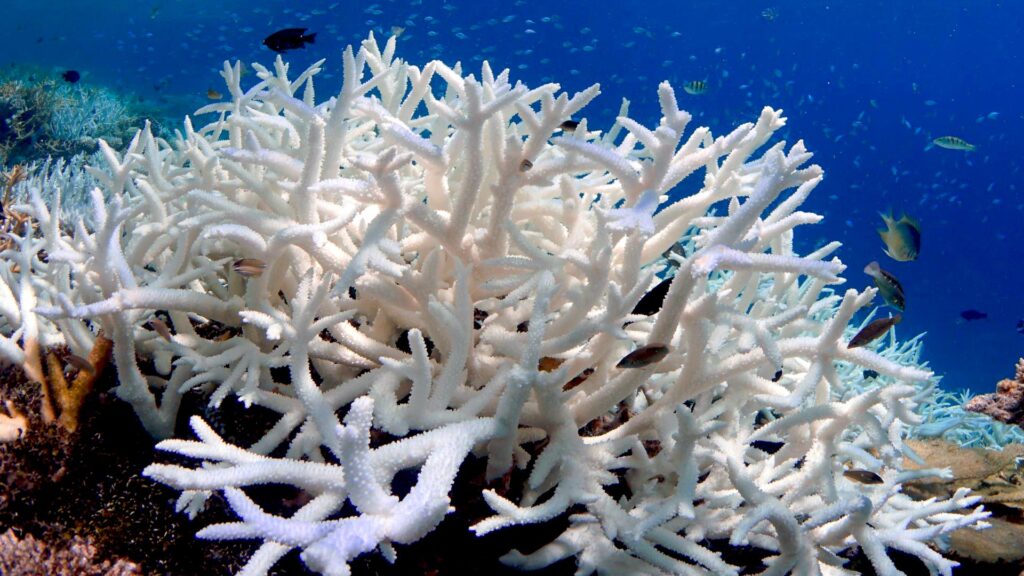
Climate change is affecting the entire world from the forests heating to the arctic melting. This global phenomenon also has serious impacts below the waves as well. The heat from global warming is causing corals to lose their vibrant colors and starve, transforming lively coral reefs into dead wreckage and harming the entire marine ecosystem. This pressing issue called coral bleaching is at the forefront of environmental programs, but what specifically is happening under the surface?
Table of Contents:
- The Symbiosis
- Coral Bleaching
- Effect on the Ecosystem
- Conclusion
The Symbiosis
The relationship between algae and corals started hundreds of millions of years ago, during the Triassic period. It occurred during an age of widespread coral reef expansion around the world. The algae called zooxanthellae are photosynthetic and provide both organisms with the nutrients and food. In exchange, the corals provide a safe shelter for the algae as well as the carbon dioxide necessary for the photosynthesis, keeping a cycle that benefits both players. It is these various algae that actually give the corals the vibrant colors they are known for. This symbiosis is actually what scientists believe drove the coral reef expansion during the late Triassic period millions of years ago.
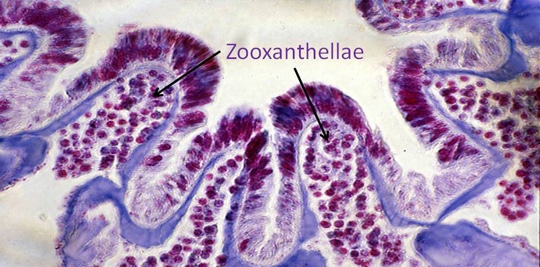
Zooxanthelae inside the coral polyps under a microscope
Coral bleaching
Now, the actual phenomenon occurs when the previously stated relationship is thrown off balance. When corals are exposed to high stress factors such as increases in water temperature, they expel the algae from within themselves. Even a 1 degree celsius increase for a couple weeks could lead to this happening. As a result, the corals are left without a food source and lose their color, becoming white husks of their former selves. Their white form is the reason for the name coral bleaching as the colors of the coral are bleached and become white.
Effect on the Ecosystem
The interconnection of algae and coral is crucial for the health of coral reefs, which provide habitat for roughly one-fourth of all marine life. Coral reefs support a wide variety of biodiversity from tiny crabs and sea stars to the bigger eels and sharks. However, throughout all of it, the coral themselves are the very foundation of this interconnected web. First, many of the nooks and crannies that small fish use to hide are based on the coral. This means without corals, they would be exposed in the open. Secondly, the animals that graze on the algae on coral also end up starving. This affects the predators that prey on them and the whole food web as a whole. This means that coral bleaching forces these animals to relocate in order to survive, leading to mass extinctions for those that cannot adapt quickly.
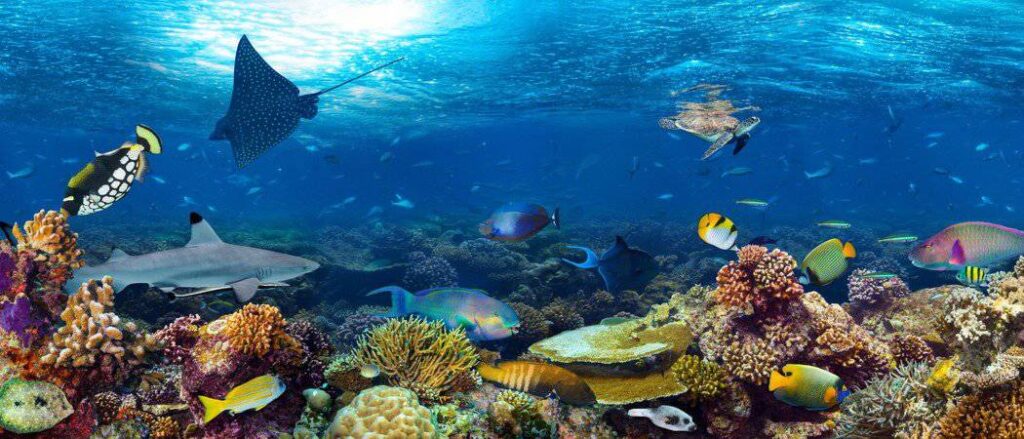
A mural depicting various marine animals at a coral reef
Conclusion
Coral bleaching is an urgent issue that needs to be addressed soon. The symbiotic relationship between the algae and coral is threatened by rising water temperatures, and that small, seemingly insignificant partnership is vital for 25% of all marine life. Next time, when you go to the ocean, understand that the world below the blue is in danger. All hope is not lost though. There are many solutions that are being implemented such as new reef structures and temperature coolers to combat this problem. Either way, coral are a precious organism and we must help them thrive.