Mythical creatures appear in nearly every culture around the world. Some of the more common ones that come to mind are unicorns, dragons, hippogriffs, and phoenixes, just to name a few. While they remain confined to the realms of myth and fantasy, many of them were inspired by real animals though were distorted by folklore, misinterpretation, or sheer creativity.
Table of Contents
- Living Species That Inspired Legends
- Fossil Evidence Behind Ancient Myths
- Mythical Creatures and the Future
Living Species That Inspired Legends
Unicorns:
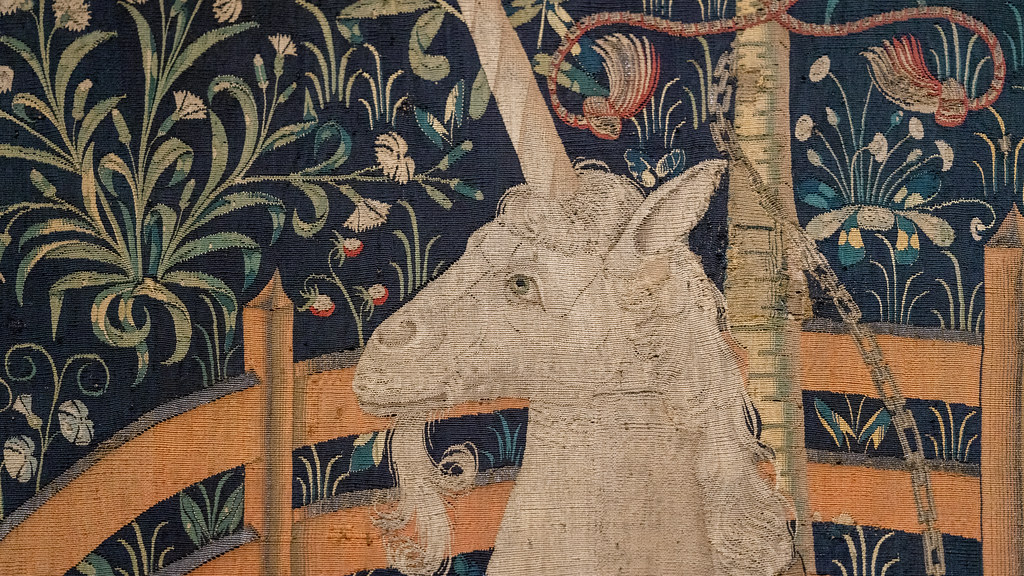
When we think of unicorns, words like magic, rainbows, and sparkles come to mind. But the real origins of this legendary creature are, unfortunately, less whimsical.
The earliest description of a unicorn was written by ancient Greek historian Ctesias, who described it as “a type of wild ass: “fleet of foot, having a horn a cubit and a half in length, and coloured white, red and black””. Yet, he used similar terms for the oryx, suggesting possible confusion between species. Later, Pliny the Elder describes an animal he calls “monokeros” that blended even more animal traits. He portrayed it with a stag’s head, an elephant’s feet, a boar’s tail, and a horse-like body, complete with a single black horn. This bizarre combination aligns almost perfectly with descriptions of rhinoceroses.
Other than those two animals, researchers also think narwhals may have inspired the myth of the unicorn. Narwhal tusks, often traded as “unicorn horns” in medieval Europe, provided physical “proof” of the creature’s existence.
Dragons:
Even more prevalent in cultures than the unicorn, the dragon myth exists in many forms around the world. From Mesopotamian culture’s ušum-gal (a powerful, remarkable creature) to Chinese lore’s celestial lóng (associated with imperial power and rainfall), dragons have manifested across civilizations. Their origins, however, are heavily debated. Some suspect they developed from humanity’s inner fear of snakes. Another theory is based on the discoveries of dinosaur fossils. For example, a ‘dragon skull’ found in 1500s Austria inspired a town statue that was later revealed to be a woolly rhino fossil.
Mermaids:
Mermaids are another classic mythical legend. One of the earliest stories comes from Syria around 1000 B.C., where a goddess was said to have transformed into a fish from the waist down. Similar tales appear worldwide, like Africa’s Mami Wata and the Caribbean’s Lasirn.
Explorers like Christopher Columbus and John Smith even claimed to see mermaids, describing them as less beautiful than expected. They were likely spotting manatees or dugongs who are large, gentle marine mammals.
Fossil Evidence Behind Ancient Myths
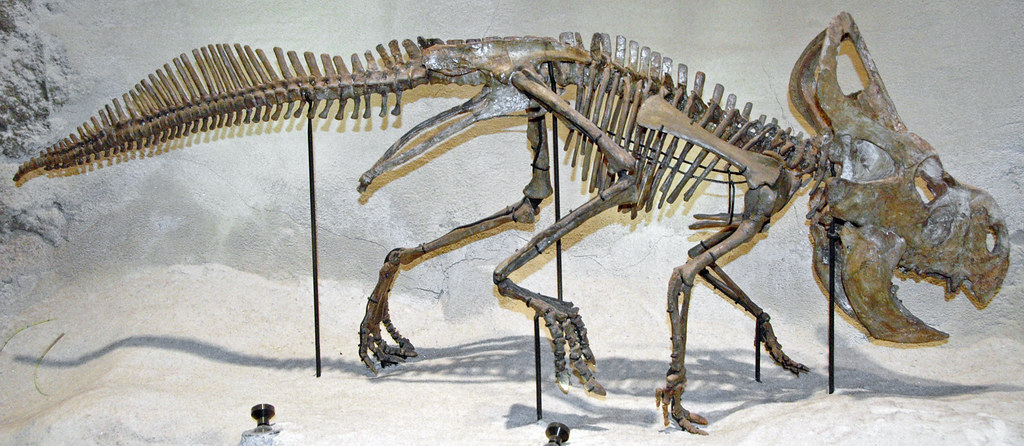
Gryphons: Gryphons are creatures with a lion’s body and an eagle’s head and wings. It made its first appearance in Greek literature around the time when Scythian and Greek merchants came into contact with one another. Some believe that the fossils of the Protoceratops and Psittacosaurus inspired this legendary creature. On the other hand, palaeontologist Mark Witton disagrees, noting that bird-mammal hybrids were depicted centuries before Greek-Central Asian contact.
Cyclops: The cyclops, the one-eyed giant, was also penned by the Ancient Greeks. A popular theory for their origin, by palaeontologist Othenio Abel, is that Greek explorers found the fossils of dwarf elephants. This is probably because there is a single hole in the middle of their skulls.
Mythical Creatures and the Future
Part of the allure of mythical creatures is humanity’s desire to explore the unknown. This idea is exemplified in the Oxford-Lausanne Collateral Hominid Project in 2014, which was a project that analyzed cryptozoological samples that people sent in with genetic analysis.
Even when mythical creatures are fictional, their origins often lie in real biological phenomena. These legends exist not just as cultural artifacts, but as reminders that the natural world still holds mysteries. So, just because science explains the ‘how’ of the world, it does not erase the magic of it.