Please note: This is the part 1 of serialized articles which talks about hair dyeing, and this part is a brief introduction of our hair mainly. Table of contents is for the aggregate, and this serialized articles consist of three sub-parts.
It is a common question to ask if my hair looks cool; It has become a more popular phenomenon to do hair dyeing, but the health risks have also raised the attention of the public.
Table of contents
- Brief overview of hair (part 1)
- Hair dyeing (part 2)
- Any health risks? & Tips (part 3)
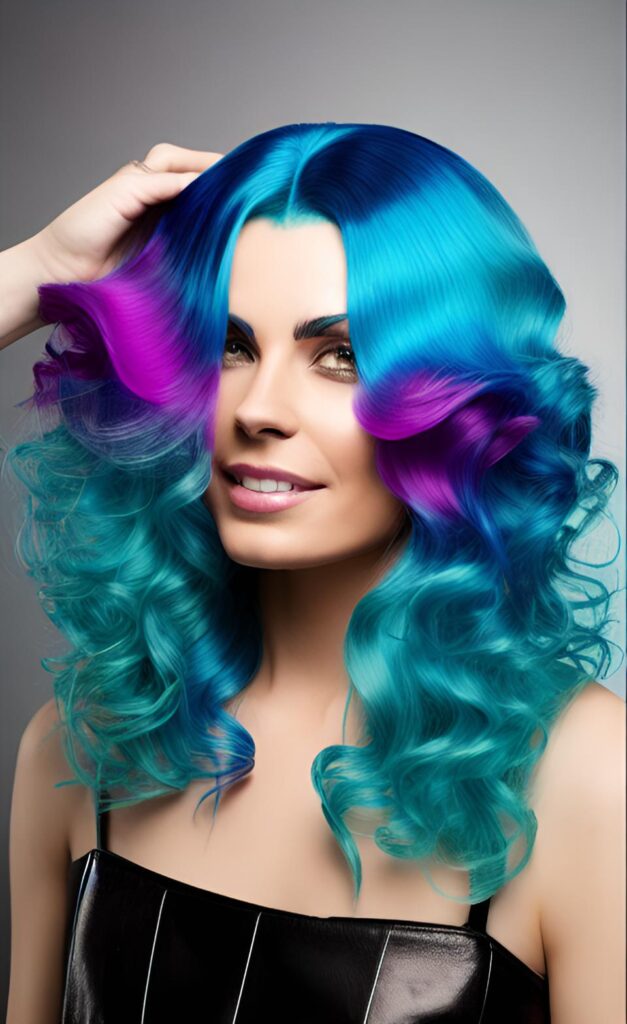
A brief introduction of our hair: where hair dyeing is happening
Is our hair dead? The brief answer is, yes, the visible parts of our hair.
To understand this, let’s talk about the growth of our hair.
Hair growth cycle
Just like plant life cycle or cell life cycle, hair undergoes growth cycle as well, and there are four phases in the cycle: anagen phase, catagen, telogen and exogen. A diagram of which the four phases look like is below:
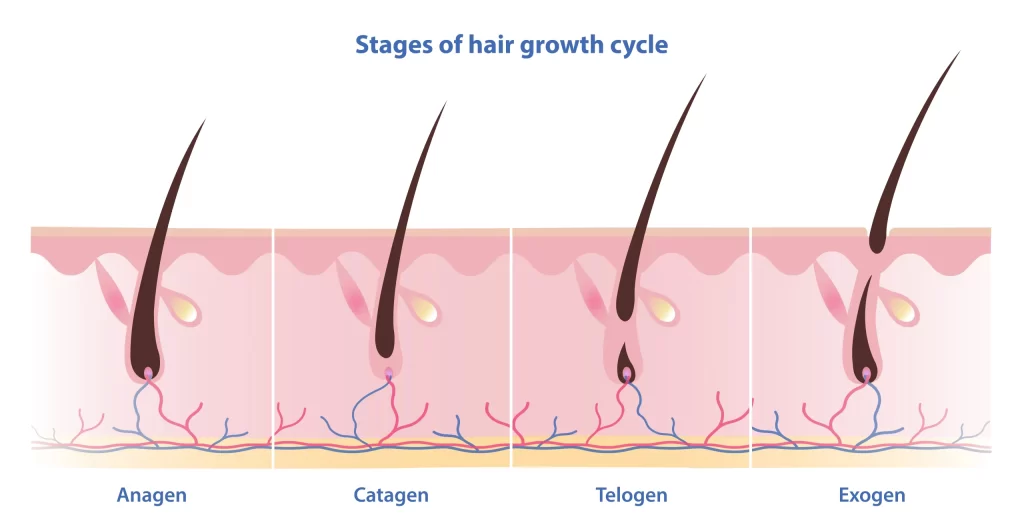
According to Peekaboo Kidz, Our hair comes out from hair follicle, which is a tube-like structure. At the bottom are hair bulb, and it contains active hair growing cells (such as papilla regulates hair growth), and it is made up of a type of protein. Blood vessels connect to the cells, and prompting the hair to grow as they provide the cells with nutrients. According to Peekaboo Kidz, as they break through the surface of the skin while growing, hair becomes visible (hair shaft). Interestingly, the visible hair is all dead cells. This growing phase is anagen, when most of the hairs on your head is at, and it lasts for about 3-5 years in average.
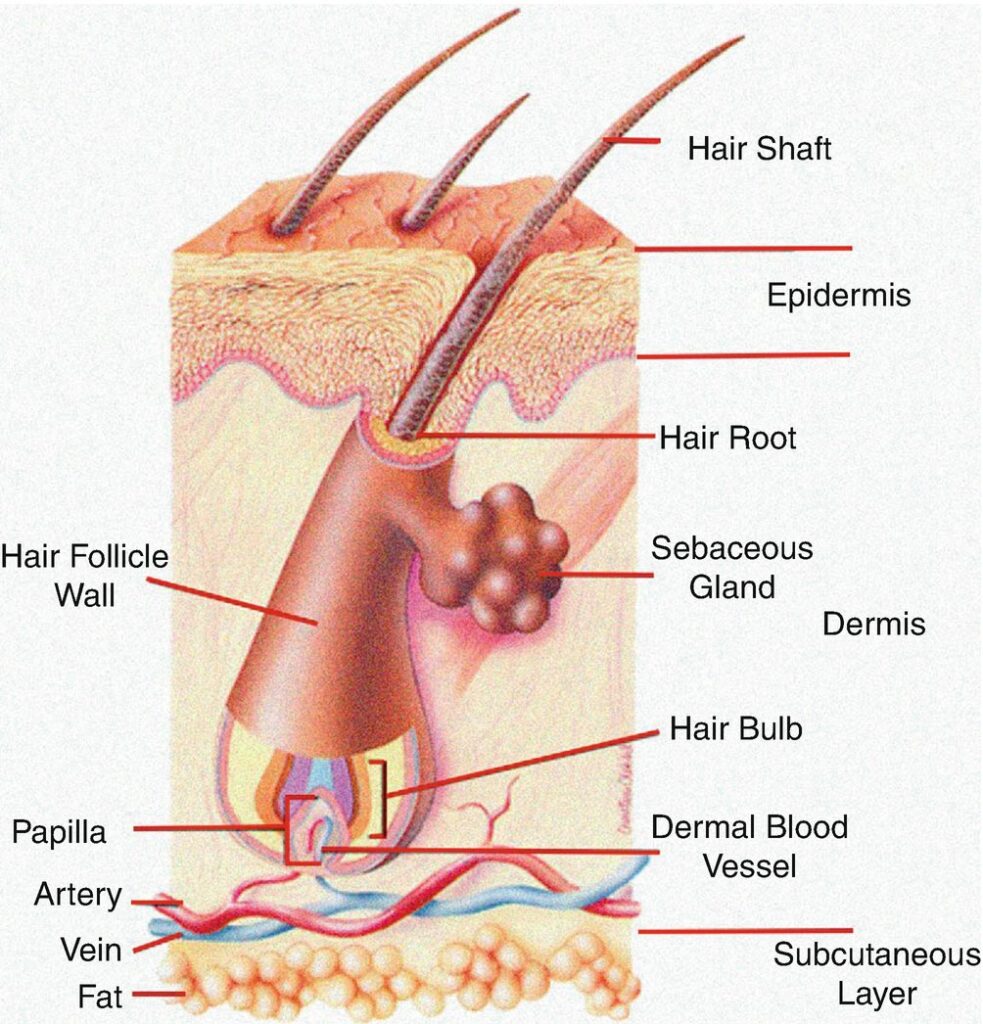
In catagen, hair growing stops, and it begins to detach from the blood supply, and is known as transitional phase. This lasts for about 10 days. After this, according to Dr Serkan Aygin, in telogen (where 10%-15% of your hair is at) and exogen phases, the hair first rest and then start to shed, and we tend to lose around 50-100 hairs per day.
Hair shaft composition (where we do our hair dyeing)
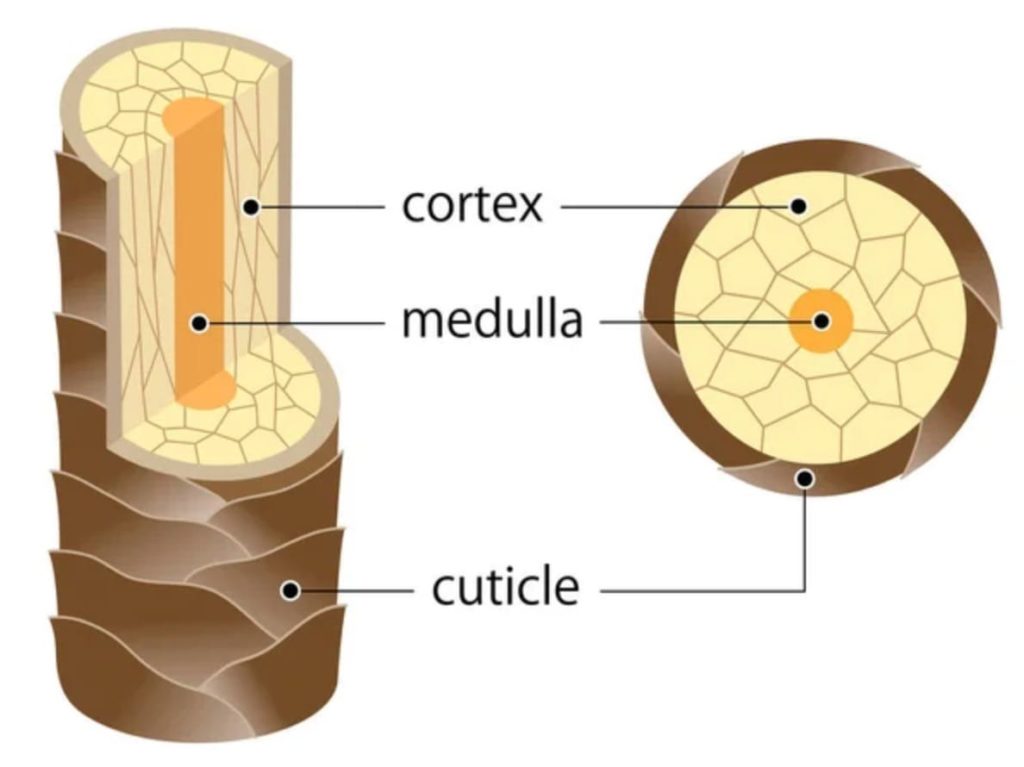
Though hair cells are dead, it is still chemically active. Hair shaft consists of modella (inner), cortex (middle) and cuticle (outer). The types of modella vary amongst species, humans, and even the hair of the same person! Chemical reactions happen in cortex mainly, and keratin (a type of protein) locates in the cortex. This will be furtherly discussed in part 2, of how hair dye interact with keratin and how it works.
This has laid the foundation for hair dye and how it works with our hair, and further information about hair dyeing will be discussed in part 2 and part 3.
Thank you for reading! See you in part 2.